
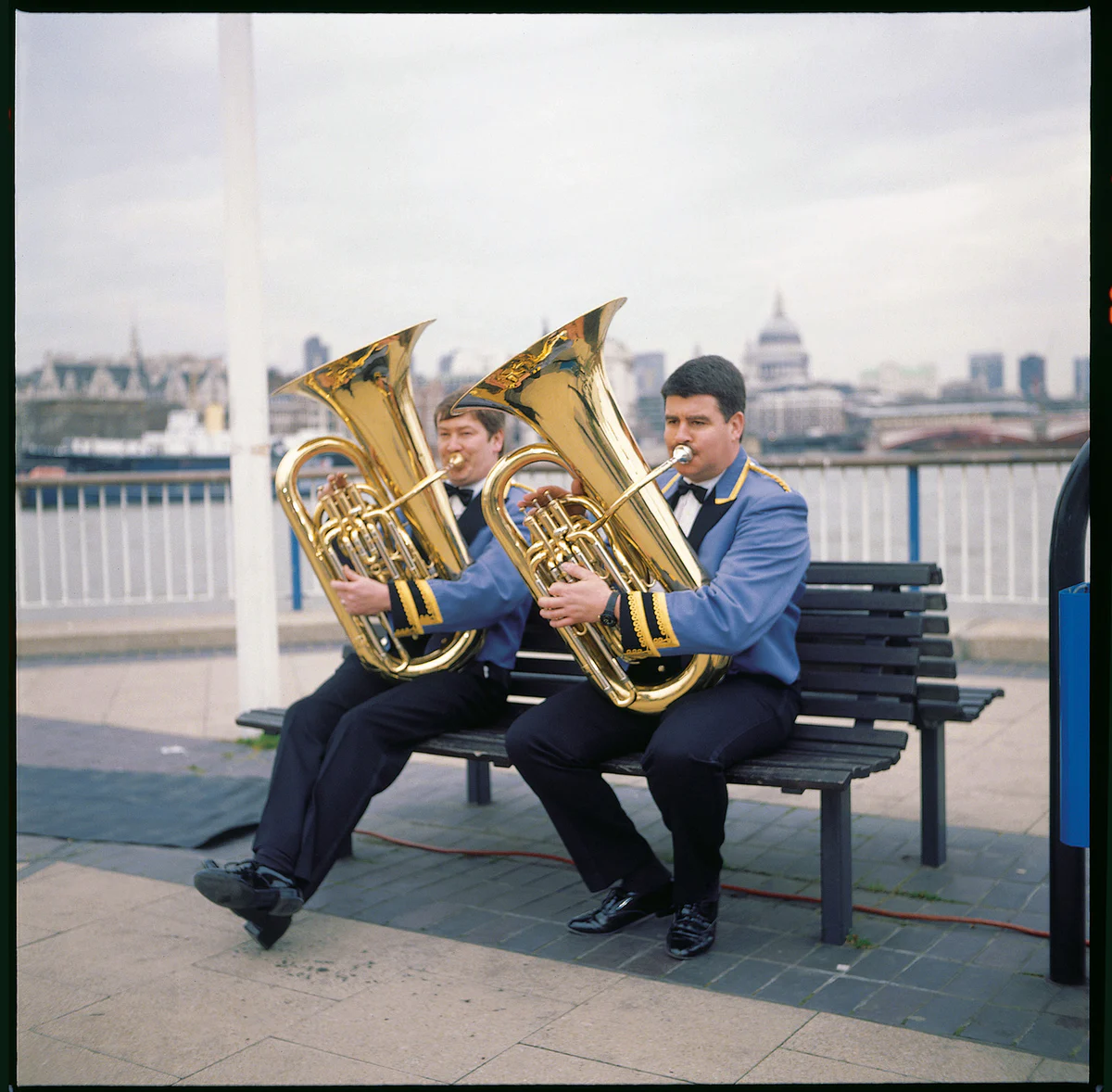
BBC Culture Show
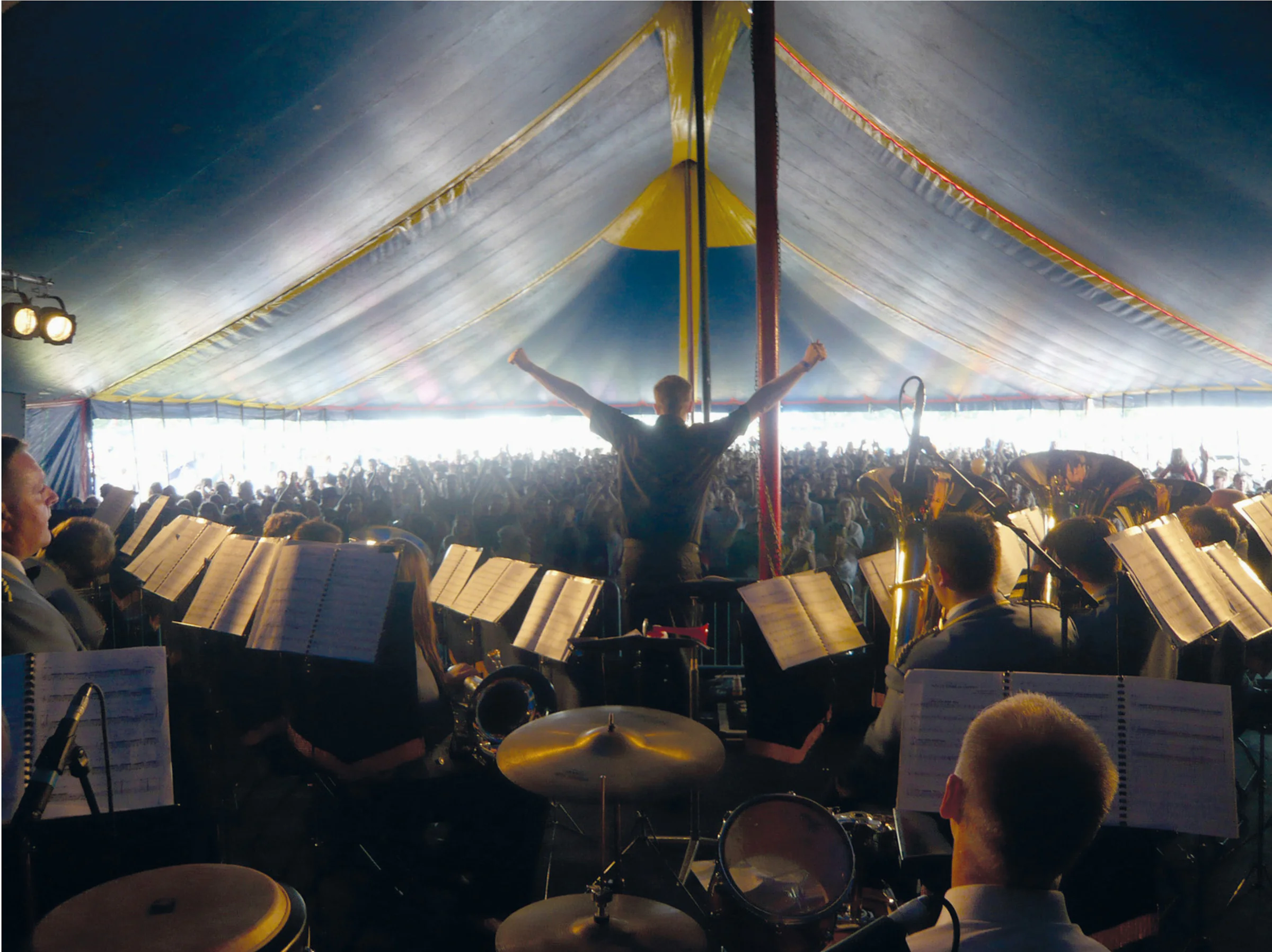
Acid Brass · Fairey Band archive
Acid Brass
A pub idea that
became a landmark.
In 1997 Jeremy Deller asked a traditional brass band to play acid house anthems. Fairey said yes.
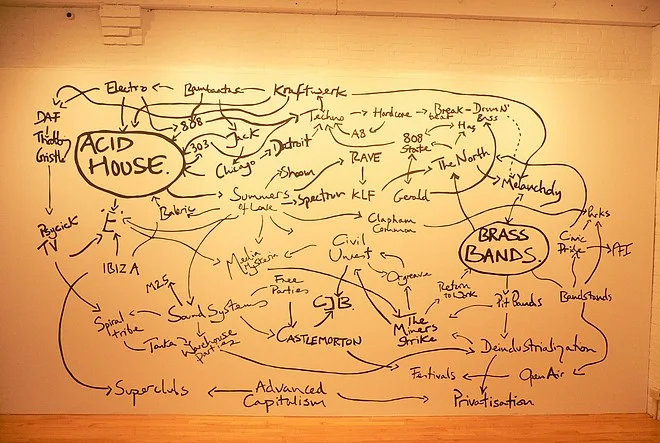
Acid Brass began as a pub conversation on a hot summer night: what would happen if a traditional brass band played acid-house anthems? For Jeremy Deller, those two words immediately opened a map of musical and social connections.
Deller found Fairey through Brass Band World and called manager John Cresswell, initially describing the proposal as a commission involving contemporary electronic dance music. He left out two awkward details: the music had not yet been transcribed and the budget was roughly £2,000 short.
Their first face-to-face meeting came at a wet Kenwood Bowl, where Deller also met arranger Rodney Newton. Hearing Fairey in person confirmed the scale and emotional power of the idea, even while Deller still felt like an outsider entering an exceptionally close-knit ensemble.
Cresswell’s appetite for risk matched a wider need to take brass music to younger audiences. The first public performance in Liverpool followed just one rehearsal, with some musicians sight-reading on the night. The uncertainty became part of the event’s electricity—and the performance was recorded live.
Deller chose personal favourites that could survive the move from machines to acoustic instruments. His definition of acid house was deliberately broad enough to encompass the pre-acid force of “This Brutal House” and the techno scale of “Cubik”. In brass, he heard the same menace, melancholy and inevitable lift.
The ten-track studio session kept that live character: every piece was captured in one take, without overdubs, in a little over six hours. From there, Acid Brass travelled well beyond traditional band audiences and became one of Fairey’s defining innovations.
Deller credited Cresswell, Bryan Biggs at the Bluecoat Arts Centre, David Sefton at the South Bank Centre and Paul Smith of Blast First Records with helping a speculative idea become a lasting work.
Watch the archive
Jeremy Deller
on Acid Brass.
Deller discusses the idea and its cultural connections for the BBC’s Culture Show.